
Alone, on the back, in a crib, every time. What safe sleep means in practice in our infant room, what we do about the fifteen-minute checks, and the one thing that can change any of it.
Parents almost never ask about sleep on a tour. They ask about food, and outdoor time, and whether we do phonics. Then they get home, and at eleven at night they think about it, and the question they actually want answered is: what happens when my baby is asleep and I am not there.
So here it is, written down, in the order it happens.
Alone, on the back, in a crib
That phrasing is the standard one, and it is standard because it is the finding: the three things that reduce the risk of sudden unexpected infant death are sleeping alone, sleeping supine, and sleeping in a safety-standard crib on a firm flat mattress.
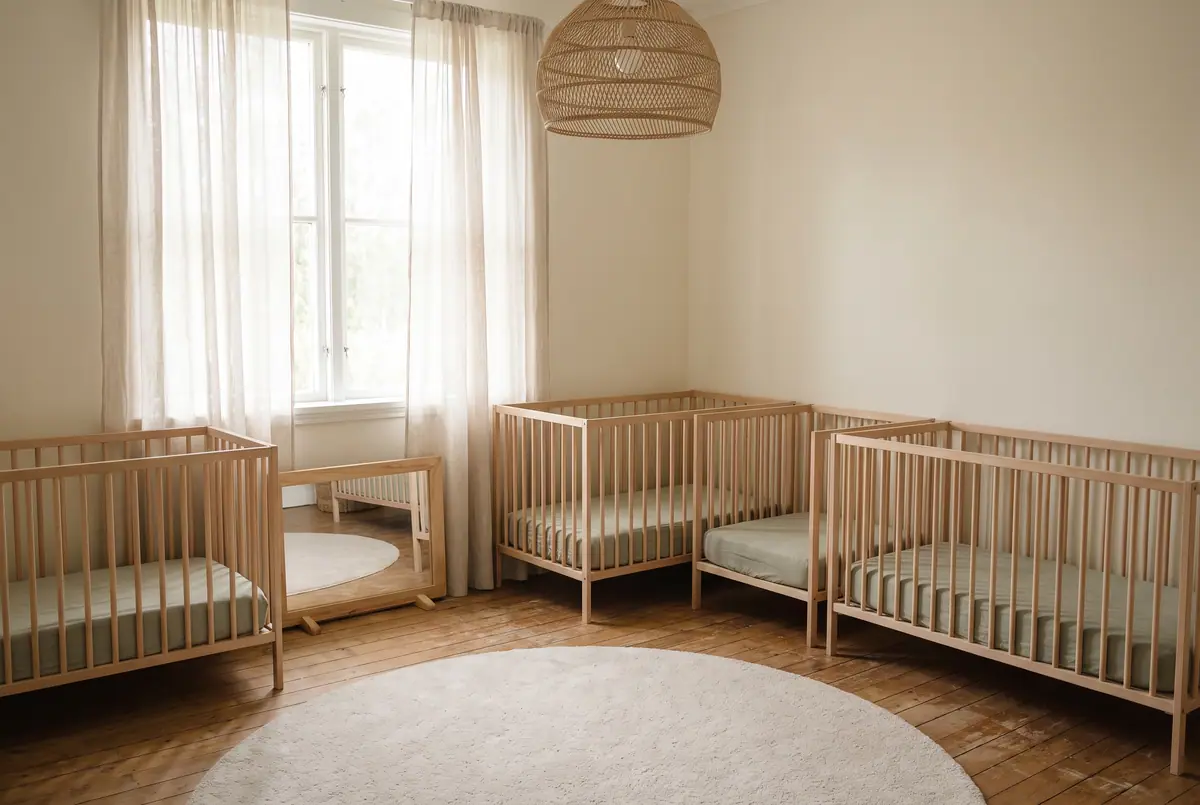
- Every infant has their own crib, which nobody else uses.
- A firm, flat mattress with a tight fitted sheet, and nothing else in the crib at all. No blanket, no pillow, no bumper, no wedge, no positioner, no soft toy, no comforter.
- Infants are always placed on their back. An infant who has learned to roll both ways is left where they roll to. An infant who can only roll one way is turned back.
- Warmth comes from a wearable blanket in the right tog, not from bedding.
- No swaddling at all once an infant shows any sign of trying to roll.
The checks
An educator is awake and in the room for the whole sleep period, with every sleeping infant within sight and hearing. Every infant is physically checked at least every fifteen minutes — colour, breathing, position, temperature — and the check is written down with the time and the educator's initials.
The log matters more than it sounds. It is the thing that makes the practice real rather than intended: at the end of the day there is a piece of paper that either has the checks on it or does not.
Falling asleep somewhere else
Infants fall asleep in arms, in the pram, in a carrier and at the table. When that happens they are moved to their crib. It is the least popular part of the policy with the person holding the baby, including me, and it is not negotiable.
The one thing that changes it
A written medical order signed by your child's physician — for reflux, for a specific condition — is the only thing that alters any of the above, and it lives in your child's file where any educator covering the room can find it. Not a text message, not a conversation at the door, and not "our paediatrician said it was fine".
Why we train the whole building
Every educator at Meadow trains on safe sleep at induction and again every year, not only the infant-room staff. The person who covers a break at 2pm is the person whose practice matters most, because they are the one who is least used to the room.