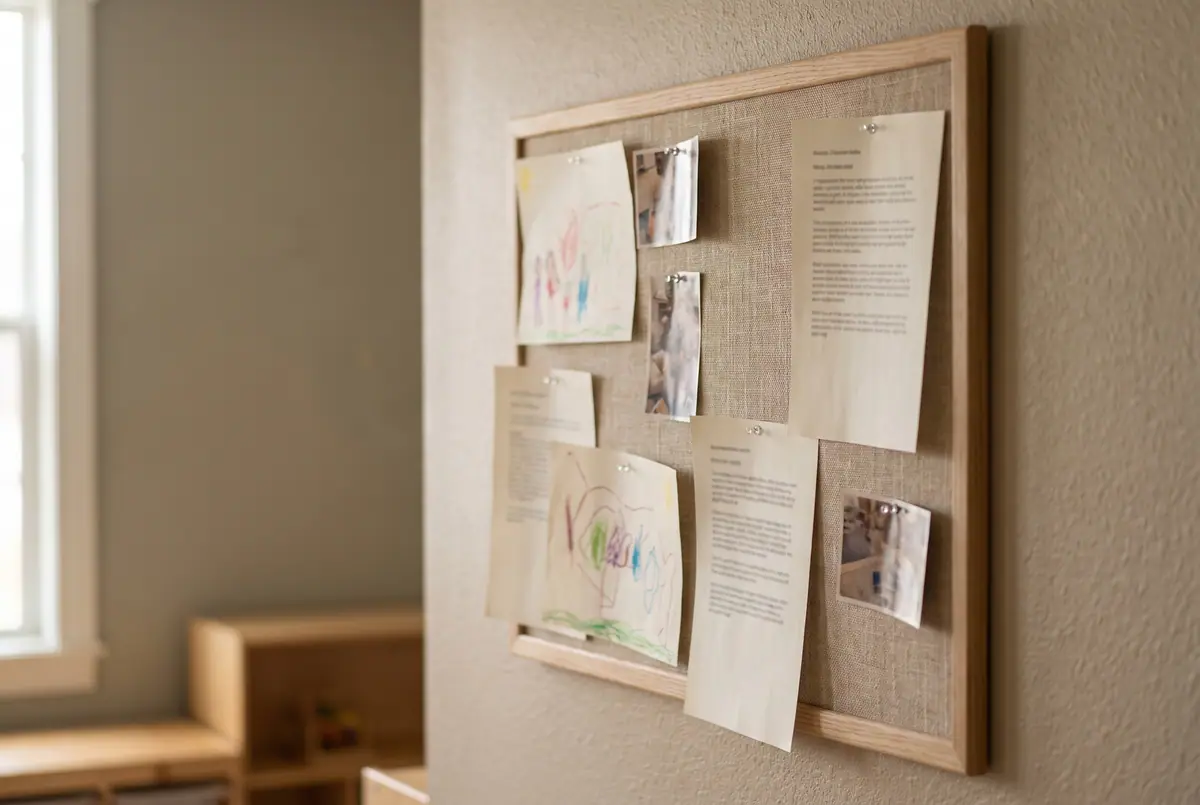
The panels by the door are not a display. They are the school’s thinking made visible, and there is a way to read them that gets you far more than "lovely, is that a bird".
Pedagogical documentation is the least glamorous and most important thing in a Reggio-inspired school. It is also, on a first visit, almost entirely illegible: some photographs, a transcript, three drawings, a paragraph in a serif font. Parents nod politely and move on.
Here is how to actually read one.
1. Find the question first
Every panel has a question in it, usually near the top and usually in a child's words. "Does a shadow go away or does it go somewhere?" That is the thing the panel is about. Everything else on it is evidence.
2. Read the transcript, not the caption
The transcript is what children actually said, typed verbatim, including the bits that make no sense. It is the part educators agonise over and the part parents skip. It is also the only place you will find your child's reasoning rather than their output.
You will regularly find that your four-year-old holds a complete and internally consistent theory of something that is entirely wrong, which is a much better sign than knowing the right answer.
3. Look at the dates
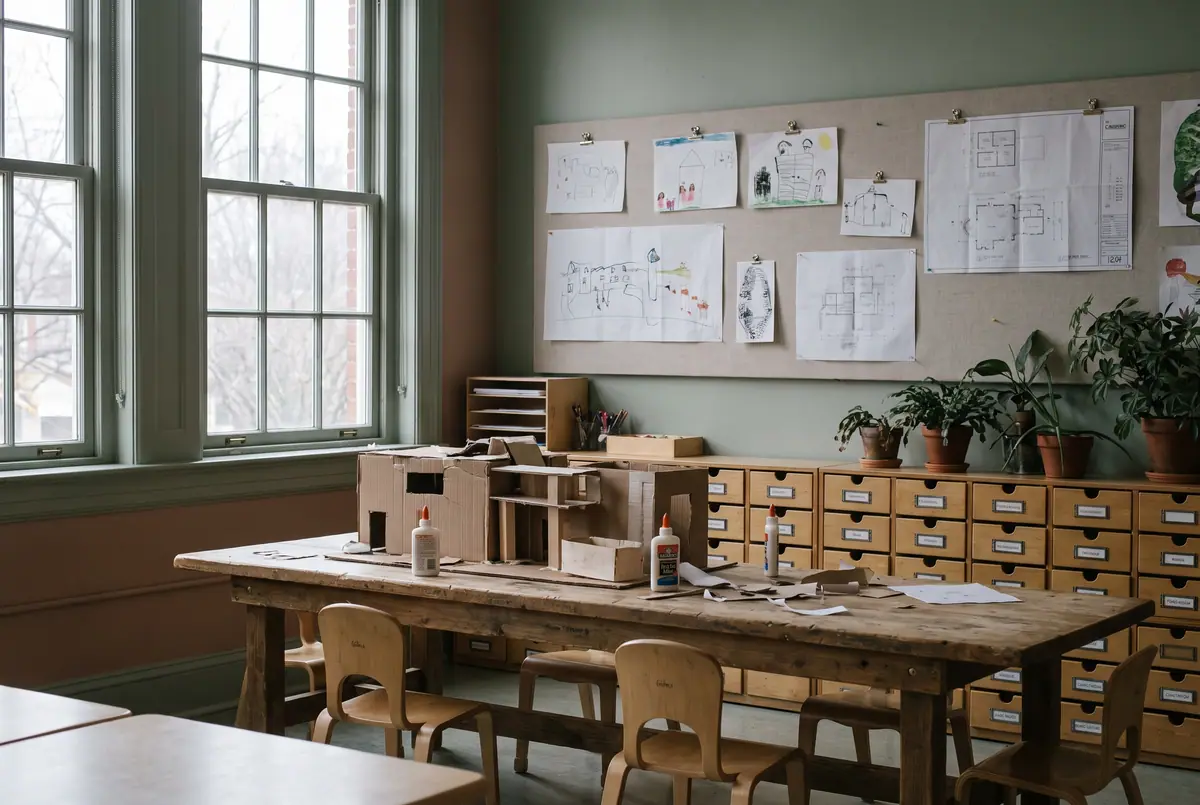
A panel that spans six weeks is telling you something a panel from one afternoon cannot. Watch how the drawings change across those weeks. That change is the learning; the finished drawing is not.
4. Notice who is not in it
Documentation is selective and we try to be honest about that. If your child has not appeared in three panels running, ask. Sometimes it means they were away. Sometimes it means an educator has not been looking hard enough, and that is exactly the kind of thing we want to be told.
Why it is on the wall at child height too
Because it is not for you. Or rather, it is not only for you. Children revisit these panels constantly, argue with what they said three weeks ago, and correct each other. That revisiting is where a lot of the thinking consolidates, and it cannot happen if the panel is at adult eye level.