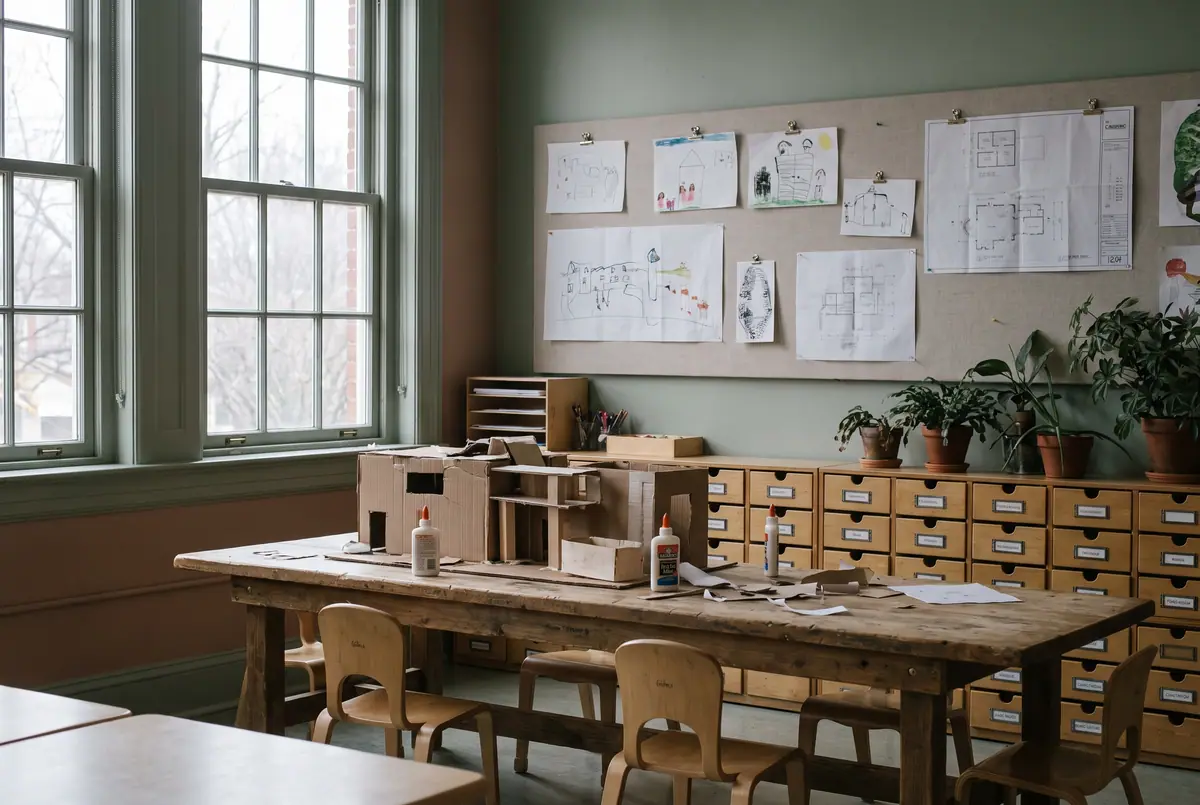
Outside every day, in almost everything
Portland gets rain on around 150 days a year. A centre that keeps children in when it rains is a centre where children spend seven months indoors.
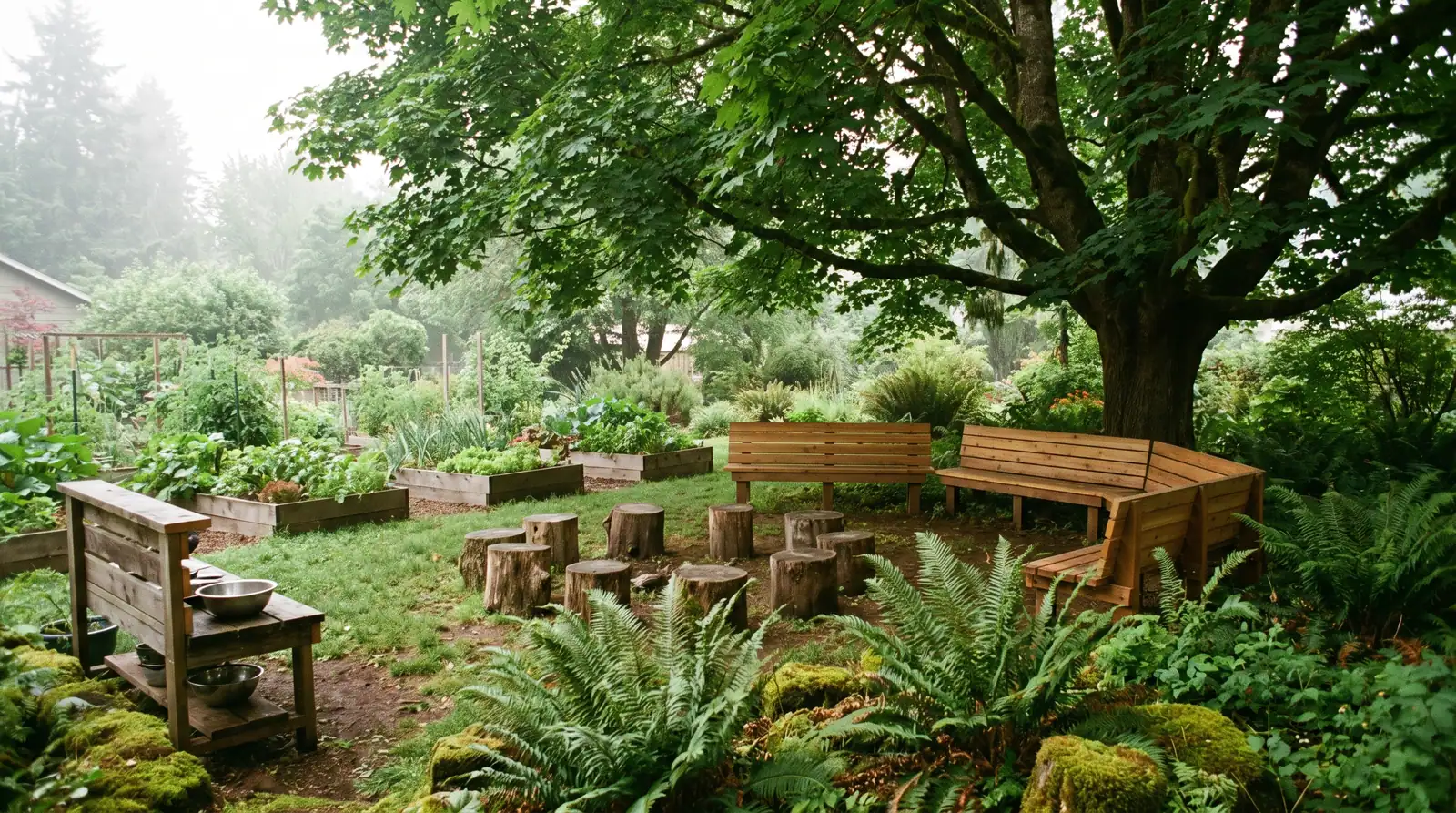
Six parts of one garden
It is not a playground. There is no fixed equipment on it at all, which surprises people on a first tour and stops surprising them by about week three.
Under the maple
Two big-leaf maples and a cedar bench circle. This is where morning meeting happens whenever the ground is dry enough, and where the shadow project started.
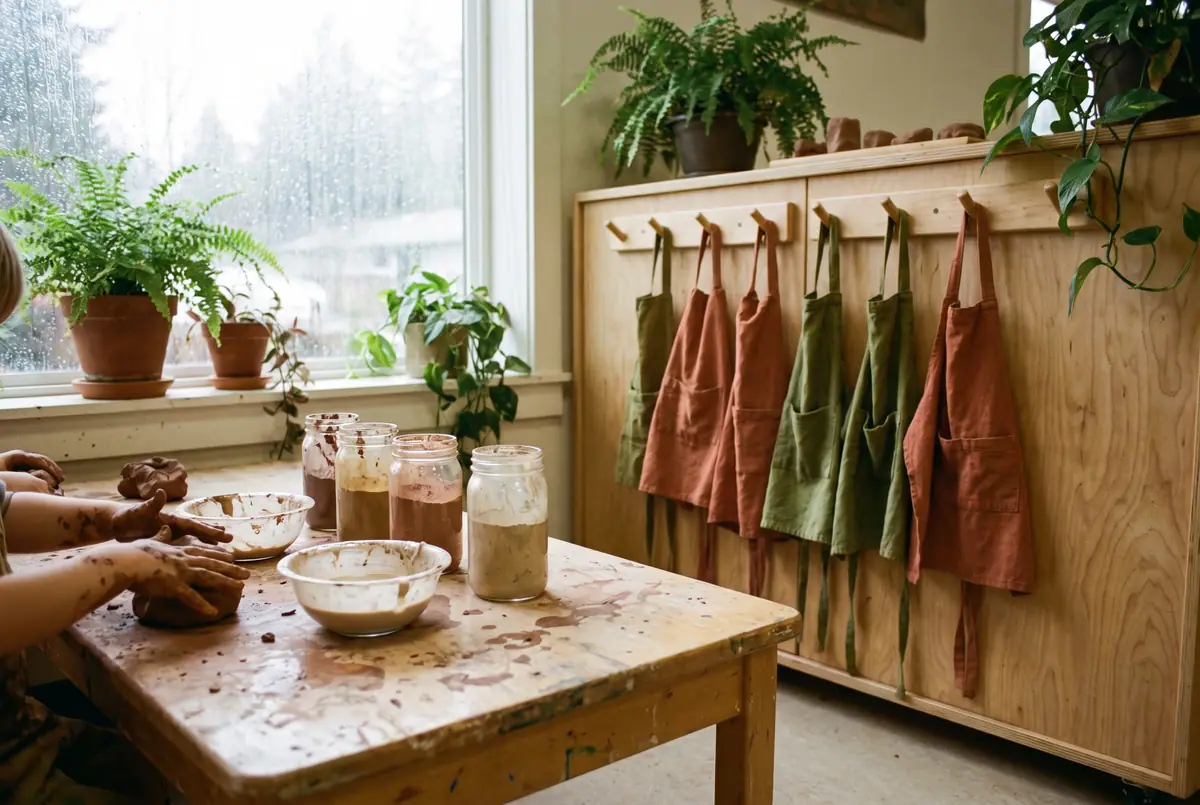
The mud kitchen
Built from reclaimed cedar with a steel sink, a real tap, scales, pans and a great many bowls. It is the busiest twelve square feet on the site and it is almost never empty.
Raised beds and the orchard
Six cedar beds the children plant, water and harvest, plus two apple trees. What comes out of the beds goes into the kitchen the same week, which is the entire point.
The loose parts store
Planks, crates, guttering, tyres, rope, buckets and lengths of fabric. No fixed play equipment, because fixed equipment has one correct use and children exhaust it in a fortnight.
The covered deck
Roofed, open-sided, and the reason heavy rain is not a reason to stay in. It is also where the infants go out on the worst days.
The slope
A grassed bank with a rope. Steeper than a risk assessor would like and assessed carefully rather than removed, because a slope a child can misjudge is how a child learns to judge.
When we stay in
- Lightning — in immediately, and we stay in for thirty minutes after the last strike.
- Ice on the ground — the paths are flagstone and they are lethal.
- Sustained heat above 95°F — shade, water and indoors in the middle of the day.
- Air quality index above 150 — the one that matters in an Oregon August. We watch it hourly during fire season and we tell you what we did.
Rain, wind, cold, fog, mud, and the horizontal rain that gets inside a hood are not on that list and never have been.
The kit list
- A waterproof jacket and waterproof trousers that actually keep water out. A shower-resistant school coat is not this.
- Wellington boots that fit, plus indoor shoes or slippers to change into.
- Two full changes of clothes in the bag, all the time, October to May.
- A sun hat and — for children over six months, with your written consent — sun cream, which we supply.
We keep laundered spare waterproofs and boots in every size. Nobody is kept in because a bag was packed in a hurry.
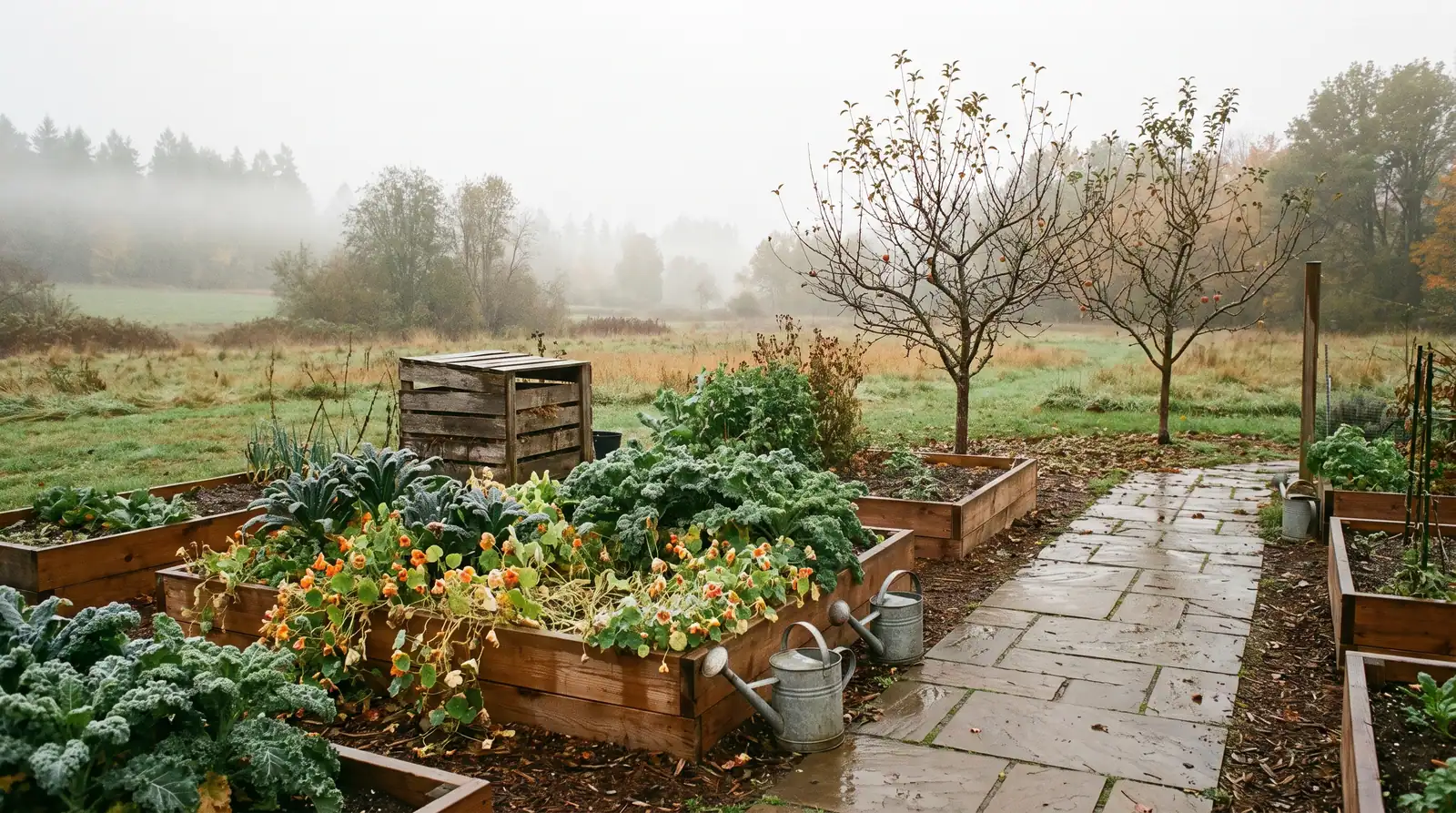
The beds feed the kitchen
Six raised beds, planted in February, harvested from May. Children sow, water, weed and pull, and what comes out goes to the kitchen the same week and comes back as lunch. In a good September the Pre-K room eats something it grew about twice a week.
It is not a large amount of food and it is not meant to be. The point is the shortest possible line between a seed and a bowl, walked by a four-year-old.
Come on a wet Tuesday
Genuinely — the wetter the better. A tour in horizontal rain tells you more about a centre's outdoor policy than any page on a website, this one included.